
Resources


Education and Family Guide
Lalla Essaydi

Education and Family Guide exploring the work of artist Lalla Essaydi
Helpful Links:
Educators
Tennessee Social Studies Standards
Tennessee English Language Arts Standards
About
BACKGROUND
“In my art, I wish to present myself through multiple lenses — as artist, as Moroccan, as traditionalist, as Liberal, as Muslim. In short, I invite viewers to resist stereotypes.”
– Essaydi
Lalla Essaydi is a contemporary American photographer and painter born in Morocco. Creating elaborately staged and layered photographs incorporating traditional Arabic architecture, calligraphy, and henna painting, Essaydi challenges assumptions made about Arab women. The exhibition also explores the lenses through which Westerners view the Middle East, and how that view affects both cultures. The literal and metaphorical layers of Essaydi’s photographs invite reflection as they challenge stereotypes.


Photography, Installation, and Performance in Essaydi’s Work
Essaydi’s photographs are technically impressive. Behind each of her images are weeks of preparation, as the text is composed, the fabrics are dyed to match the setting in which they will appear, and the architectural backdrops are carefully constructed. The almost life-size photographs appear in sharp focus, the result of her use of a large-format camera and traditional film.
Essaydi covers her models, and sometimes their garments and walls, in layers of hand-painted henna calligraphy, subverting traditional Muslim gender stereotypes through the presence of the written word. The sacred Islamic art form of calligraphy, traditionally reserved exclusively for men, is used by Essaydi as a small act of defiance against a culture in which women are relegated to the private sphere. Furthermore, by creating this calligraphy with henna, an art traditionally employed by women for women, Essaydi fully reclaims the female voice. The performative process and the resulting photographs allow Essaydi to push and pull the boundaries between East and West, male and female, past and present.
Lalla Essaydi’s photographs often reappropriate and reclaim Orientalist imagery from the Western painting tradition, inviting viewers to reconsider the Orientalist mythology and male gaze on Arab women. Essaydi carefully stages each photograph, posing her subjects to mimic works by French neoclassical painters such as Jean-Auguste-Dominique Ingres and Jean-Léon Gérôme.
“Perhaps by invoking the Orientalist gaze of Western male painters, my work can promote in Western women a greater sense of commonality with their Arab counterparts.”- Essaydi
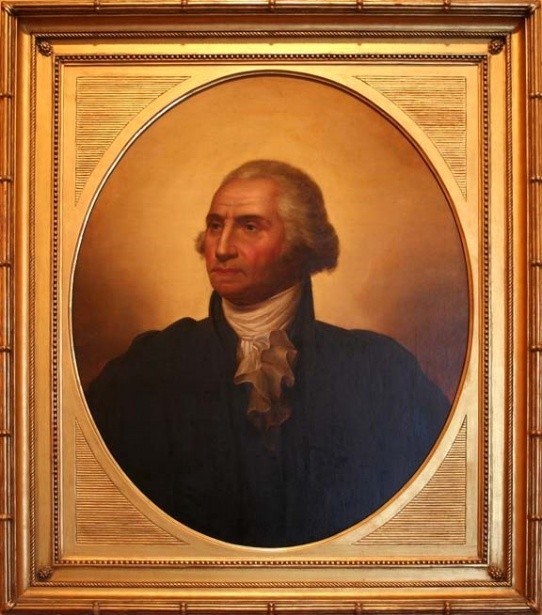
Located in Gallery 1
I wonder... Does this look familiar to you?
Many of George Washington’s portraits and profiles look the same. Take a look at a selection of George Washington’s portraits at the National Portrait Gallery in Washington, D.C. Washington Everywhere | National Portrait Gallery
Why do you think so may artists would use the same image over and over again? How did this contribute to new Americans learning about the founding of the United States?
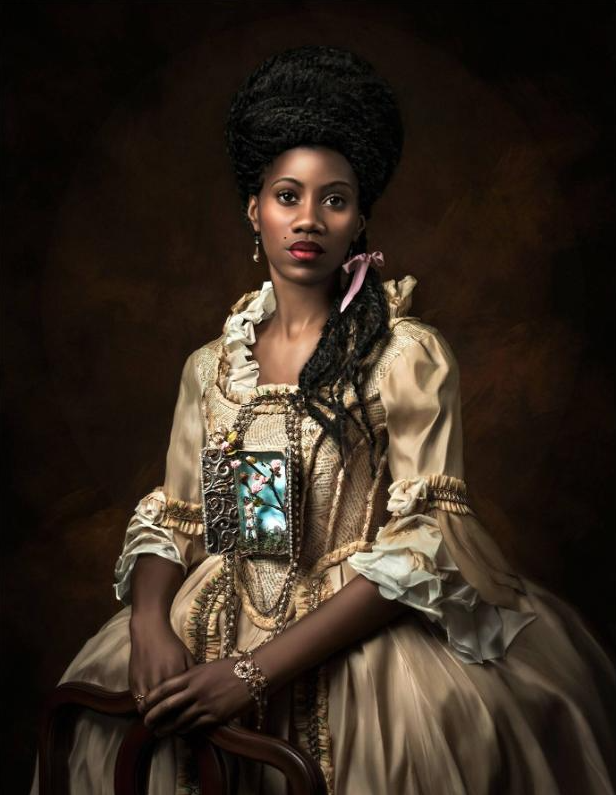
Think of other portraits you have seen and look at other images below—what does each one tell us about the person featured? What has the artist shared with us about the subject of the painting?
SSP.01 Gather information from a variety of sources
SSP.05 Develop historical awareness by: Sequencing past, present, and future in chronological order and Understanding that things change over time
SS.4.08 Determine the importance of different groups to the American Revolution
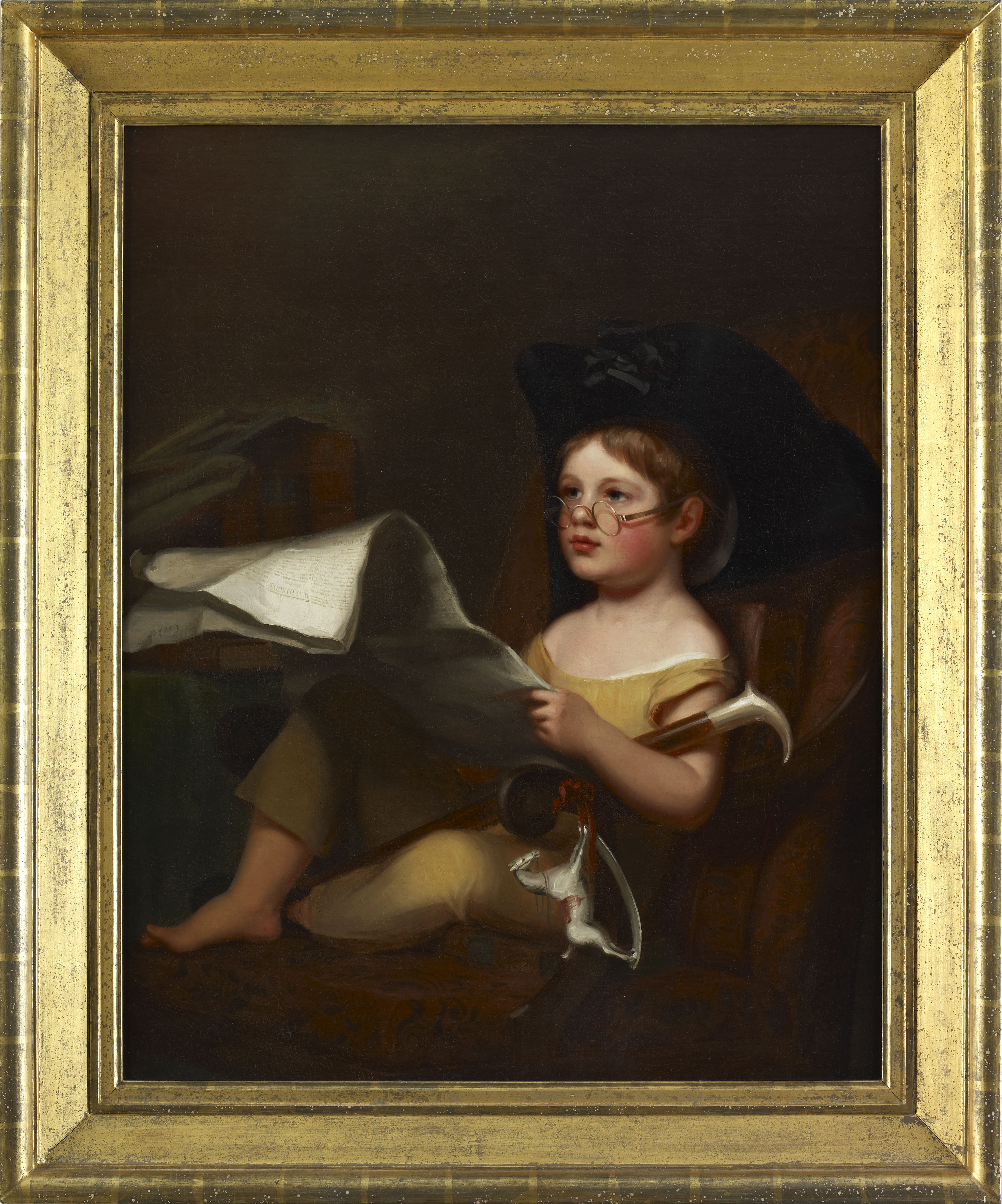
Located in Gallery 1

Located in Gallery 1
Textiles showcase the artistry of this vast and culturally diverse region. From the intricate embroidery on a Palestinian wedding dress to the complex iconography on an Afghan war rug, textiles reflect the beliefs, practices and experiences of people from these lands.
Gauze, a thin transparent material of silk, linen or cotton, is first mentioned in 1279 under the name gazzatum; it was among the fabrics considered too luxurious for monks to wear. The name may come from the town of Gaza, and the cloth may be of the same type as the famous “veils of Cos” with which Caesar bade Cleopatra cover herself when she visited Rome in 43 B.C.
Muslin takes its name from Mosul, in Iraq, where it was originally made. According to Marco Polo, it was “a cloth of silk and gold,” although the name has, for several centuries now, simply designated a fine cotton or silk material.
Links for more information:
https://fashion-history.lovetoknow.com/fabrics-fibers/middle-eastern-textiles
https://study.com/academy/lesson/moroccan-textiles-history.html
Henna and Calligraphy – Symbolism and Tradition
The art of Henna—called mehndi in Hindi and Urdu—has been practiced in Pakistan, India, Africa, and the Middle East for over 5,000 years. The art of decorating the hands and feet has been practiced throughout the Arabian Peninsula, the Middle East, India, and North Africa to celebrate significant life events, including marriage.
In Morocco, a wedding celebration can last up to five days and includes time dedicated to applying henna art. Before the wedding ceremony, the bride-to-be gathers with female friends and relatives to eat and talk about married life. The older women pass along their wisdom to help prepare the bride for her wedding night while her hands and feet are decorated with henna. Guests at the wedding also wear henna, but their designs are usually less elaborate than the ones on the bride.


Arabic calligraphy is the artistic practice of handwriting and calligraphy based on the Arabic alphabet. It is known in Arabic as khatt (Arabic: خط), derived from the word ‘line’, ‘design’, or ‘construction’. Kufic is the oldest form of the Arabic script.
From an artistic point of view, Arabic calligraphy has been known and appreciated for its diversity and great potential for development. In fact, it has been linked in the Arabic civilization to various fields such as religion, art, architecture, education and craftsmanship, which in turn, have played an important role in its advancement.
Although most Islamic calligraphy is in Arabic and most Arabic calligraphy is Islamic, the two are not identical. Coptic or other Christian manuscripts in Arabic, for example, have made use of calligraphy. Likewise, there is Islamic calligraphy in Persian or the historic Ottoman language.
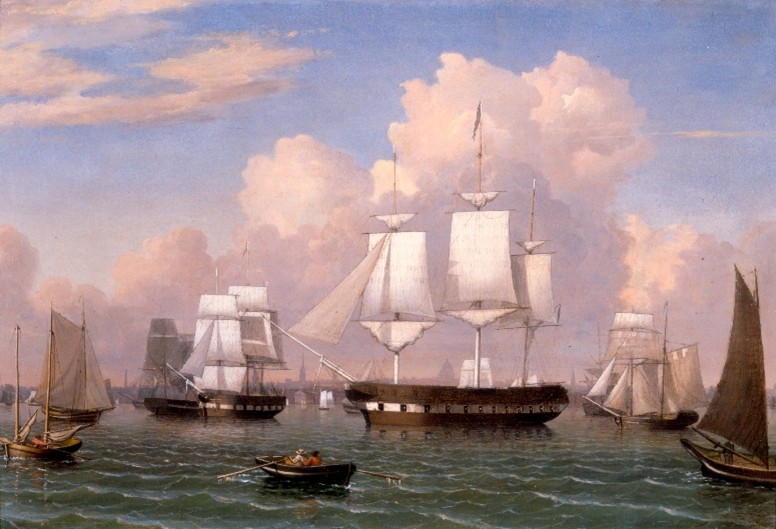
Located in Gallery 1
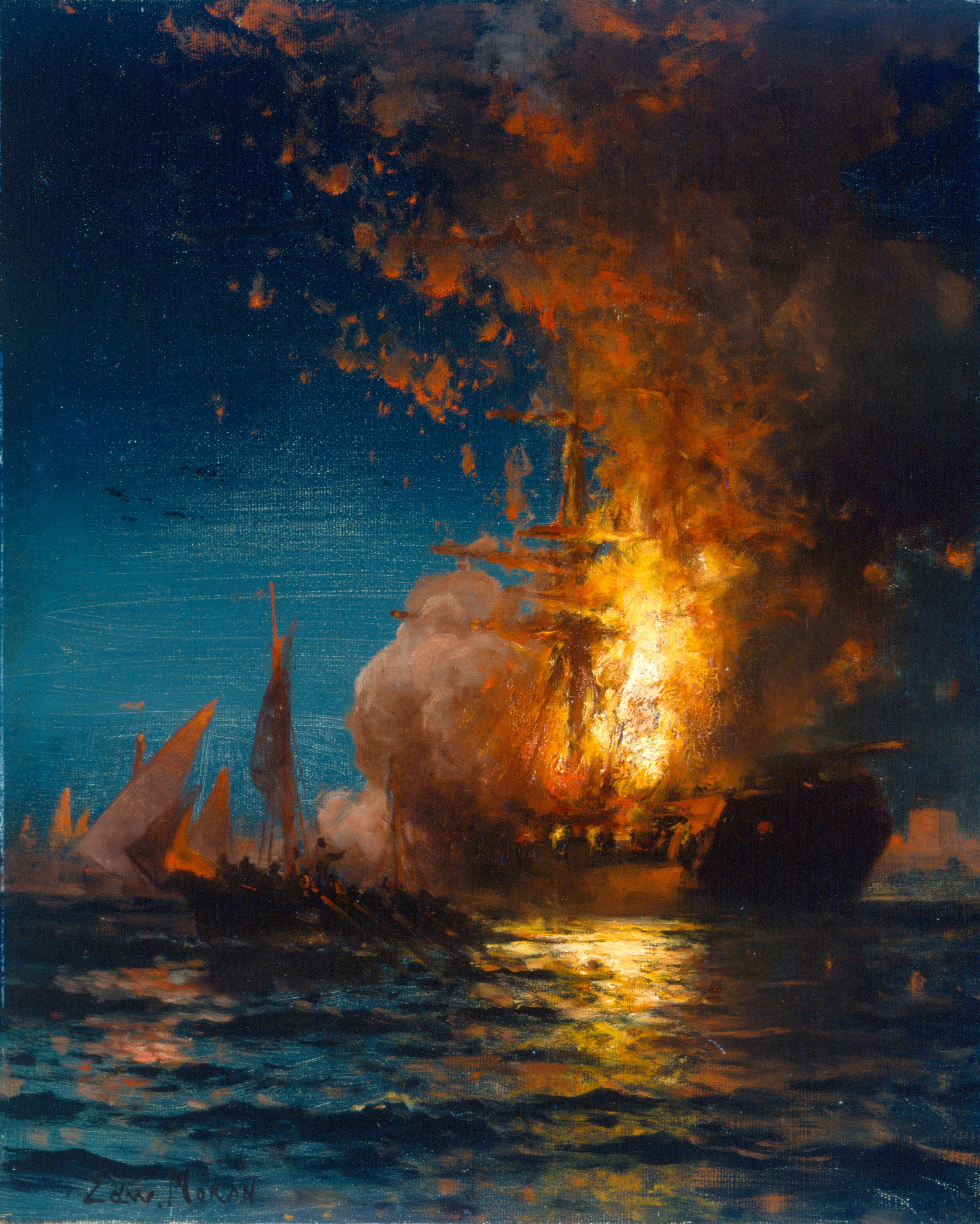
Located in Gallery 1
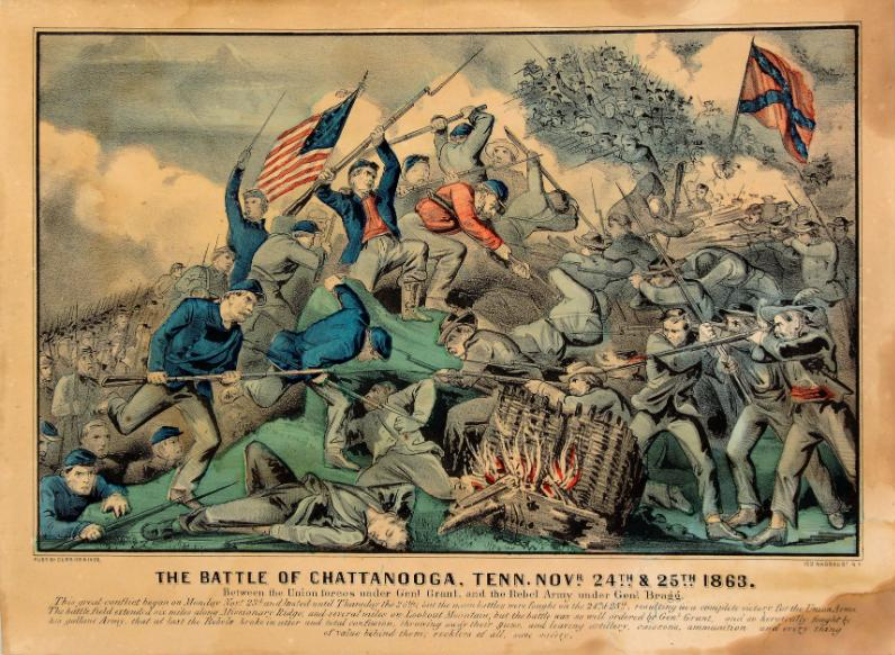
Not on view
Something to consider: STEM Connection
Artists were key players in documenting conflicts both to share with the public and to create a record of events. Do some research about the methods used in the artworks from the Hunter Museum. How would an etching or lithograph reach a different group of people than a painting? How would these inventions (and others like photography and film) affect the ways in which Americans learned about and responded to conflict?
SSP.01 Gather information from a variety of sources, including media and technology sources


More from the Artist:
Feminist Artist Statement- http://lallaessaydi.com
The traditions of Islam exist within spatial boundaries. The presence of men defines public space, the streets, the meeting places. Women are confined to private spaces, the architecture of the homes. In these photographs, I am constraining women within space, confining them to their “proper” place, a place bounded by walls and controlled by men. Their confinement is a decorative one. The women, then, become literal with this visual confinement, I recall literal confinements. The house in the photographs is a large, unoccupied house belonging to my extended family. When a young woman disobeyed, stepped outside the permissible space, she was sent to this house. Accompanied by servants, but spoken to by no one, she would spend a month alone. In this silence, women can only be confined visions of femininity. In photographing women inscribed with henna, I emphasize their decorative role, but subvert the silence of confinement. These women “speak” visually to the house and to each other, creating a space that is both hierarchical and fluid. Furthermore, the calligraphic writing, a sacred Islamic art form, inaccessible to women, constitutes an act of rebellion. Applying such writing in henna, a form of adornment considered “women’s work,” further underscores the subversiveness of the act. In this way, the calligraphy in the images is one of a number of visual signs that carry a double meaning. As an artist now living in the West, I have become aware of another space, besides the house of my girlhood, an interior space, one of “converging territories.” I will always carry that house within me, but my current life has added other dimensions. There is the very different space I inhabit in the West, a space of independence and mobility. It is from there that I can return to the landscape of my childhood in Morocco and consider these spaces with detachment and new understanding. When I look at these spaces now, I see two cultures that have shaped me and that are distorted when looked at through the “Orientalist” lens of the West. Thus, the text in these images is partly autobiographical. In it, I speak of my thoughts and experiences directly, both as a woman caught somewhere between past and present, as well as between “East” and “West,” and as an artist, exploring the language in which to “speak” from this uncertain space.
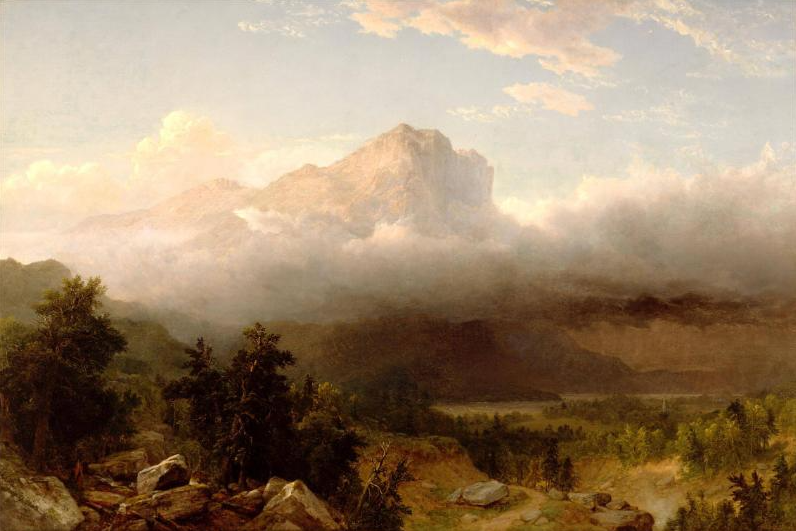
Located in Gallery 4
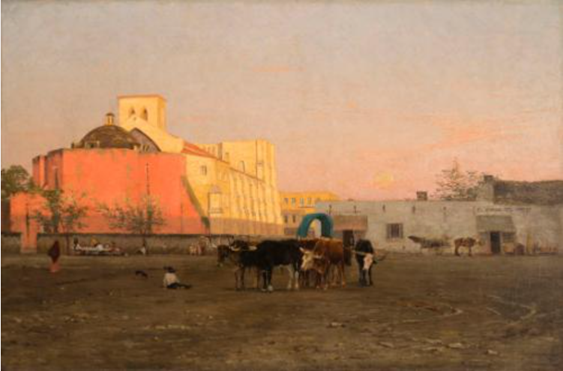
Located in Gallery 4
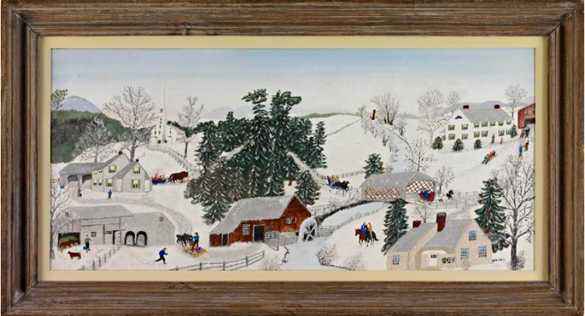
Located in Gallery 14
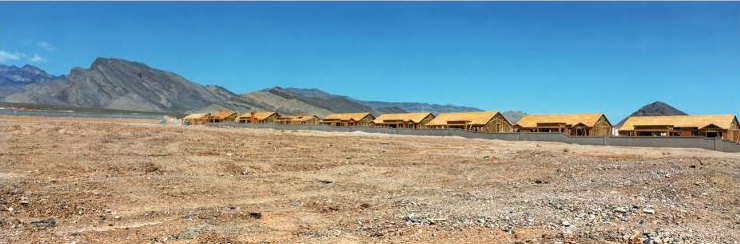
Art can be an expression of identity and culture. Some communities have had these important personal representations threatened because they were different or were in opposition to new ideas being brought by expanding frontiers.
Look at the following 3 artworks that respond to the impact on the people and the land during the Westward Expansion of the United States.
Consider: what emotions do you see represented? Can you find examples of how it felt to lose something very important? Can you also find examples of resilience? What symbols, colors, and details did the artist use to share these emotions?
SS.3.22 Examine how American Indian cultures changed as a result of contact with European cultures, including: decreased population, spread of disease (smallpox), increased conflict, loss of territory, and increase in trade.

Located in Gallery 5
Located in Gallery 5
Located in Gallery 5
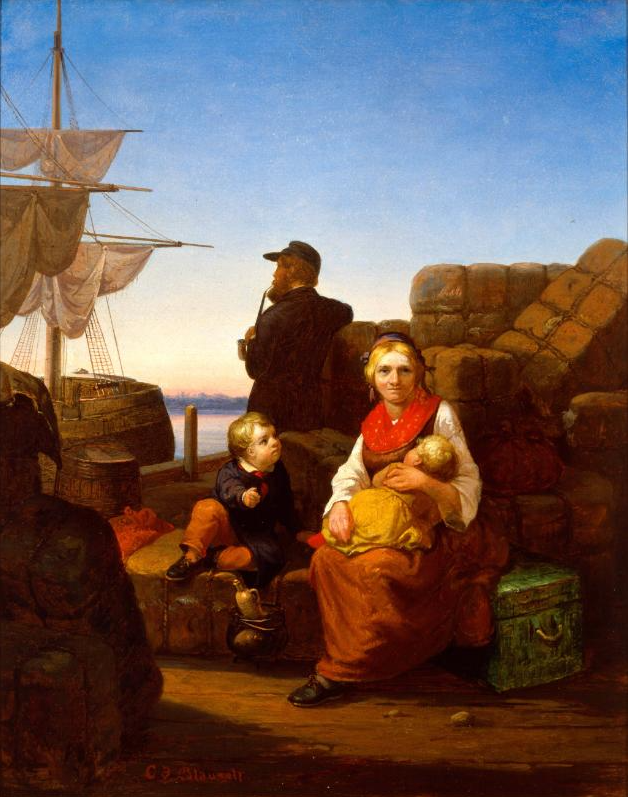
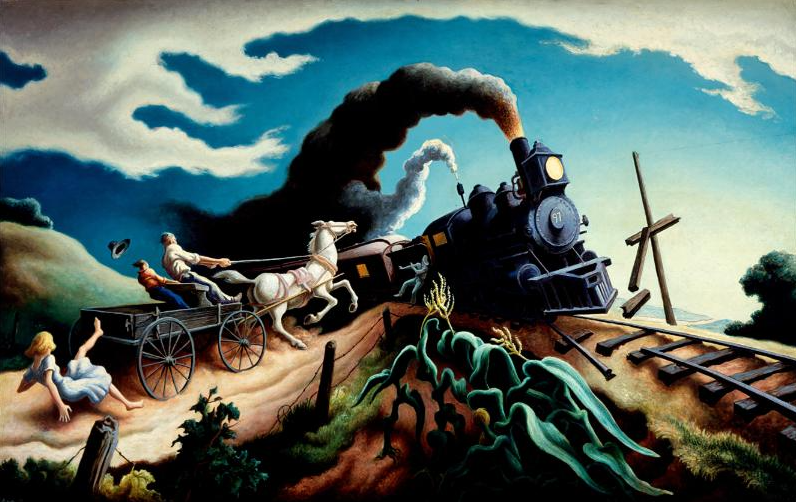
Cities also expanded rapidly during the mid 19th century. People came to the United States from all over the world! In cities like New York, many diverse groups of people lived very close together. Trains, trolleys, and streets showcased the many ways lives overlapped.
Look at the images below: Find people who are working, resting, excited, nervous, and confident. What are they doing? Where do you think they are going?
SSP.03 Organize data from a variety of sources in order to: Compare and contrast multiple sources, Recognize differences between multiple accounts, and Frame appropriate questions for further investigation
R.1. Cornerstone Read closely to determine what a text says explicitly and to make logical inferences from it; cite specific textual evidence when writing or speaking to support conclusions drawn from the text.
Located in Gallery 3

Located in Gallery 12
Located in Gallery 14

Listen to the song Poor Old Joe by Paul Robeson, a renowned singer during the early 1900s and the Harlem Renaissance. During the Great Migration, many African Americans travelled to cities in the North in search of new opportunities and equality while others remained and worked in agriculture in the South. How do the lyrics connect to the artwork?*
*This is an artwork about migration by someone who was an immigrant (rather than a migrant) but has overlapping themes for both experiences as discussed above
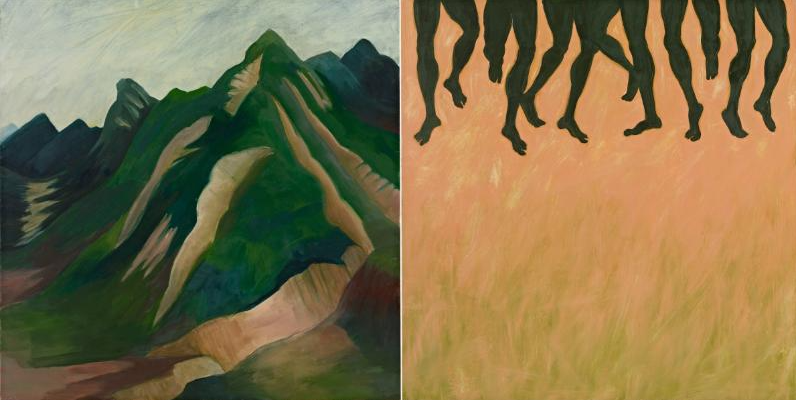
Left: Hung Liu (1948-2021), I Hear Their Gentle Voice Calling, 2017, mixed media, multi-layer resin, 82 x 82 in. Toledo Museum of Art. Purchased with funds from the Libbey Endowment, Gift of Edward Drummond Libbey.
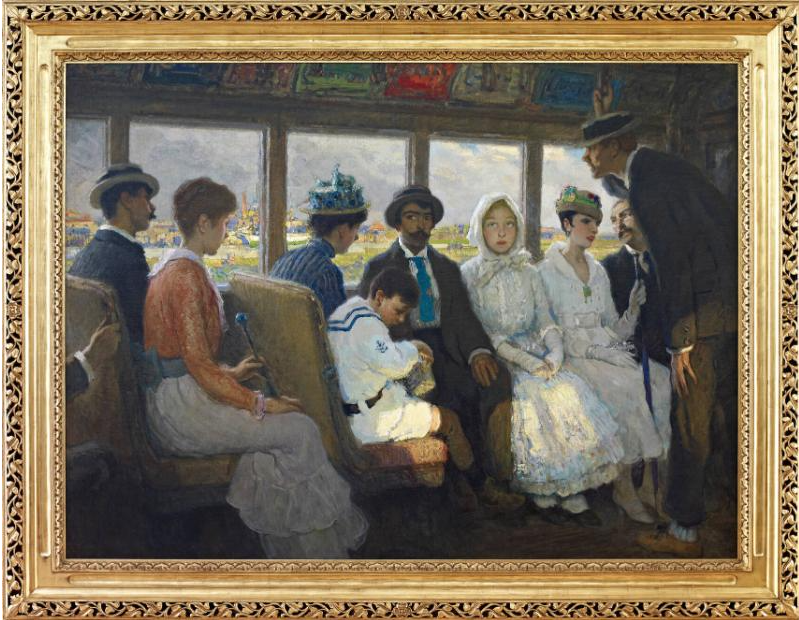
Located in Gallery 12

Located in Gallery 15
Activity: What Were They Thinking?
Immerse yourself in the world of Reginald Marsh's Subway - 14th Street and consider the variety of intersecting lives featured in the painting. Using the attached guide, write what do you think these New York City subway-goers were thinking at that moment in time.
Download activity
Immigrants have been crucial in shaping American history and culture. Many of America’s most celebrated artists were immigrants or the children of immigrants who chose to build their lives in the U.S.

Located in Gallery 18

Located in Gallery 18
Look at the artworks above and at left: Think about how these two artists combine images from American culture with historical Japanese and Korean art to create something new.
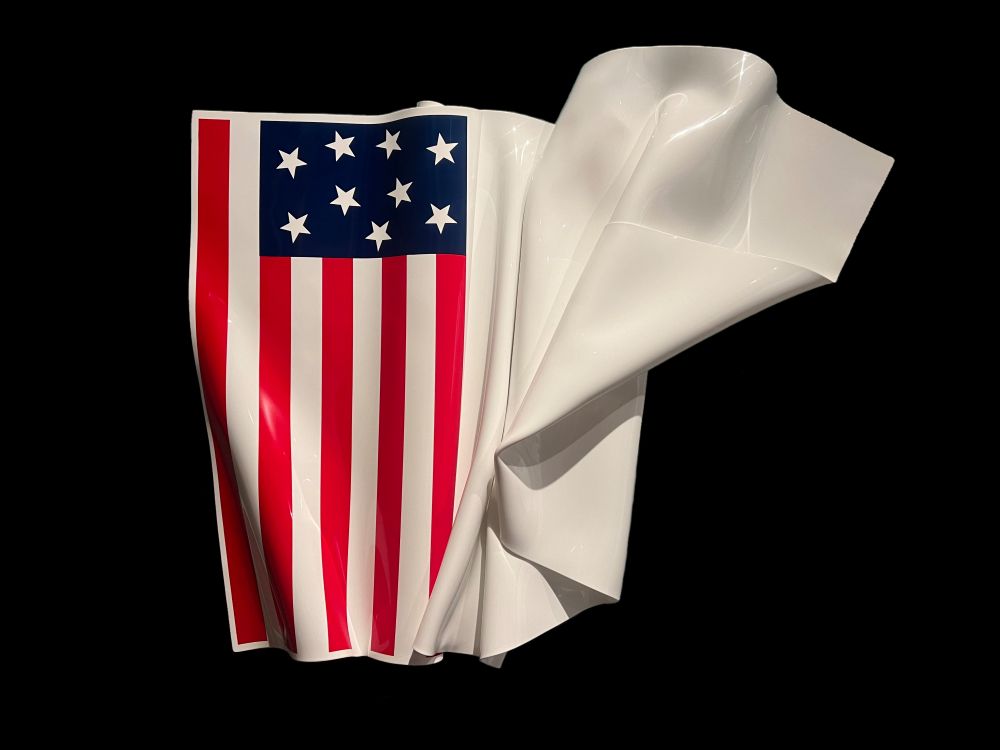
Located in Gallery 1
Activity: Celebration Flag
Mimi Herbert left half of the work Celebration Flag blank, suggesting an opportunity for viewers to add their own ideas to complete the flag. Flags are used to identify a place using colors and symbols—The United States flag uses 50 stars for the 50 states, 13 stripes for the 13 original colonies, blue for justice, red for valor and bravery, and white for purity and innocence. Use the blank space provided in the activity below to share how you would complete Mimi’s flag.
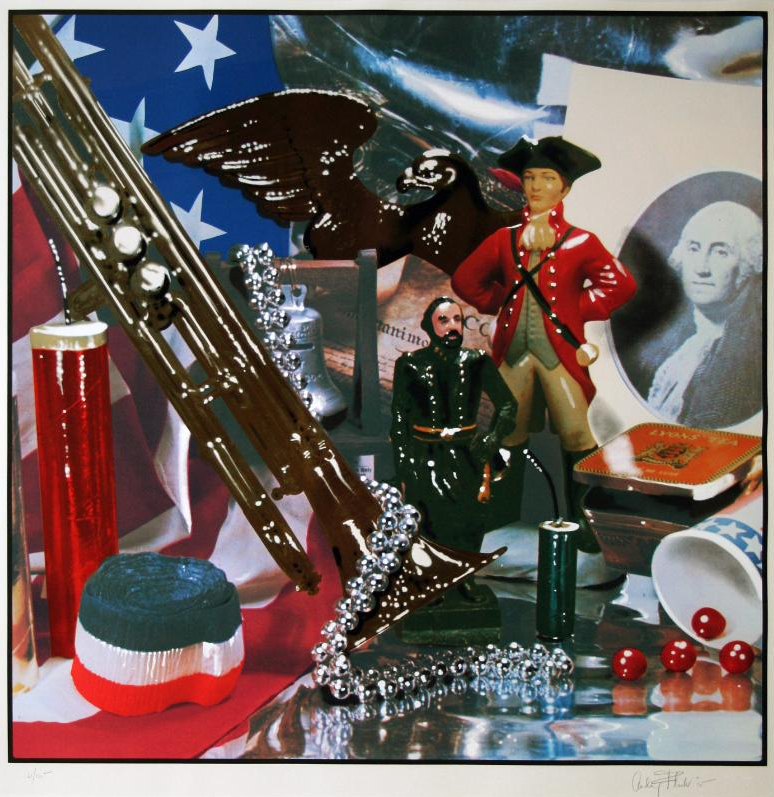
Located in Gallery 13
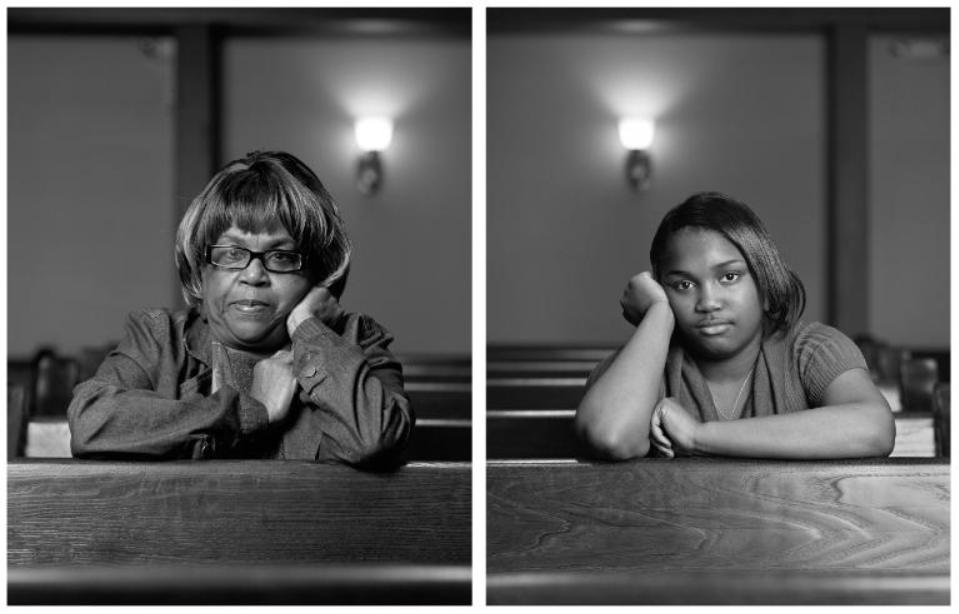
Contemporary art continues to address themes of identity, conflict, movement and our changing world. Contemporary can be defined as “right now.” All artwork is contemporary at the time it is made and reflects the social, political and personal impacts of the artist’s environment. Look at the works below. How do these artworks reflect on history as well as the “right now”?
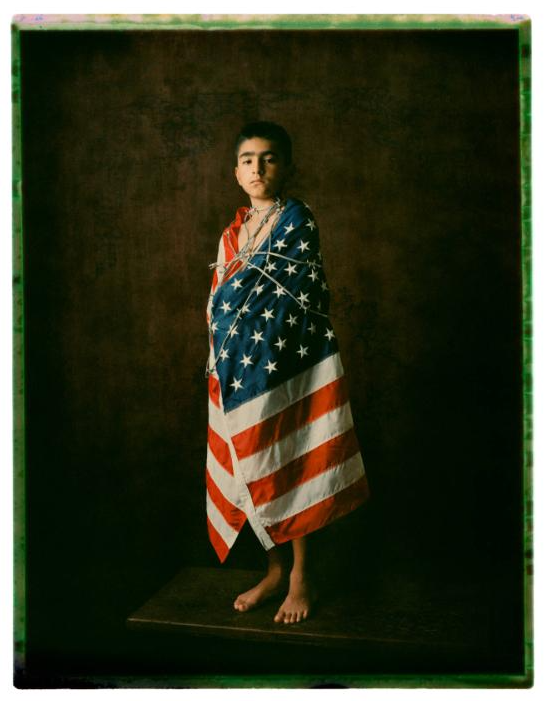
Not on view
Not on view
Not on view

